KNOW THE DIFFERENCE BETWEEN PASSPORT AND  A VISA:
Traveling soon and need to know the difference between a passport and a visa? Before traveling, be sure you know the different between a passport and a visa because you may need both.

What is a Passport?

http://www.speedbirdtravels.com/wp-content/uploads/2013/12/passport-and-visa.jpg                 

A passport is issued to a country’s citizens for international travel and identification. It is used for identification purposes and to verify one’s country of citizenship. If traveling outside your country, it is used to regain entry into your country of citizenship.
  • A passport includes a photo of you, your name, birthdate, gender, and physical characteristics
  • For U.S. citizens, some countries only require a passport for entry. Other countries may require a visa before entry. You should confirm if a country specific visa is required before traveling.
  • The most common passport is a tourist passport, but there are others for diplomats and government officials.

What is a Visa?

 http://www.adventuretansentrek.com/picture/nepal-visa.jpg

  • A visa is official permission from a foreign country’s government to enter the country.
  • The visa is placed inside of your passport as proof of permission to enter the country.
  • The visa will indicate how long you can visit a particular country as determined by that country’s government.
  • The most common visa types are tourist, student, work, and transit visas.
  • Depending on where you are traveling, a visa can be valid for a single or multiple visits.
  • Some visas require an application to be filed prior to entering the country and other visas are granted upon entering the country.
  • Your country of citizenship determines whether or not you need a visa to enter a particular country.
  • Certain countries require an interview or medical screening prior to applying for a visa.

Traveling soon and need to know the difference between a passport and a visa? Before traveling, be sure you know the different between a passport and a visa because you may need both.

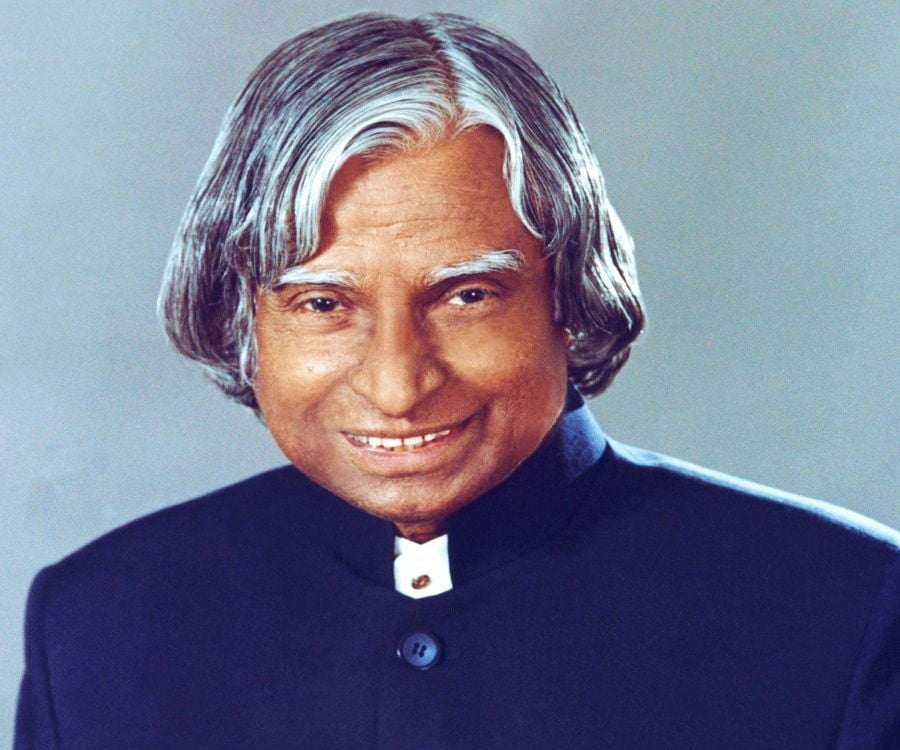
Missile man

Quick Facts
Also Known As
Missile Man
Famous as
Former President of India, Scientist
Nationality
religion
Islam
Born on
15 October 1931 AD    Famous 15th October Birthdays
Zodiac Sign
Libra    Libra Men
Born in
Rameswaram, Tamil Nadu
Died on
27 July 2015 AD
place of death
Shillong, Meghalaya, India
father
Jainulabudeen
mother
Ashiamma
Married
No
awards
Bharat Ratna (1997)
Padma Vibhushan (1990)
Padma Bhushan (1981)
     
       Little did Jainulabdeen and Ashiamma know that their son would grow up to be the first citizen of India. An Indian scientist and administrator, Kalam served as the 11th President of India from 2002 until 2007. One amongst the most respected people of the country, Kalam contributed immensely both as a scientist and as a president. His contribution at the Indian Space Research Organization (ISRO) was immense. He was responsible for numerous projects such as Project Devil and Project Valiant and launch of the Rohini-1, besides developing missiles under the missions Agni and Prithvi. For the same, he was popularly tagged as the “Missile Man of India”. Kalam was honored with great laurels and awards for his work by both the Government of India and other countries. After completing his term as President, Kalam served as a visiting professor in various esteemed institutes and universities of India.

       Childhood & Early Life
  • A.P.J. Abdul Kalam was born to Jainulabdeen and Ashiamma on October 15, 1931. He came from a family whose financial conditions weren’t sound enough. As a means to support his family’s meagre income, Kalam took up odd jobs in his childhood but never gave up on his education. 
  • He graduated from Saint Joseph's College, Tiruchirappalli in 1954 but not satisfied with his degree, he left for Madras later next year to study aerospace engineering. He enrolled at the Madras Institute of Technology (MIT).
    Career
    • After graduating from MIT, Kalam took up the position of chief scientist at the Aeronautical Development Establishment of Defense Research and Development Organization (DRDO). However, the profile didn’t appeal Kalam much who shifted to the Indian Space Research Organization (ISRO) where he was the project director of India's first indigenous Satellite Launch Vehicle. EDIT 
    • His years at the ISRO were the most crucial ones, as they left a lasting impact on him. Kalam lead many projects and turned out to be successful each time. EDIT 
    • In the 1970s, Kalam directed two projects, namely, Project Devil and Project Valiant, which sought to develop ballistic missiles from the technology of the successful SLV programme. EDIT 
    • A milestone was achieved when locally built Rohini-1 was launched into space, using the SLV rocket. Upon watching the raving success of Kalam, the government agreed for initiation of an advanced missile program under his directorship. He played a pivotal role in developing missiles under the missions Agni and Prithvi.  EDIT 
    • Kalam was the Chief Executive of the Integrated Guided Missile Development Program (I.G.M.D.P) which researched in simultaneous development of a quiver of missiles instead of taking planned missiles one by one. EDIT 
    • From 1992 until 1999, Kalam was appointed as the Chief Scientific Adviser to the Prime Minister and the Secretary of Defence Research and Development Organisation. It was during this time that Kalam served as the Chief Project Coordinator for Pokhran II nuclear tests, after which he was fondly called the “Missile Man of India”.  EDIT 
    • Kalam succeeded K. R. Narayan to serve as the 11th President of India from 2002 until 2007. It was a highly one-sided contest. With his appointment, Kalam became the first scientist and first ever bachelor to occupy the Rastrapati Bhawan.  EDIT 
    • During his tenure as a President, Kalam was both appreciated and criticised. The latter was mostly due to his inaction in deciding the fate of 20 mercy petitioners.  EDIT 
    • In addition to all the profiles that Dr Kalam held, he authored numerous influential and inspirational books. Amongst all his books, “India 2020” was the widely read and appreciated one. It forecast an action plan which advocated India turning into a knowledge superpower and as one of the developed nations of the world by the year 2020. His other books include, “Ignited Minds”, “Mission India”, “Inspiring Thoughts” and “The Luminous Sparks”.  EDIT 
    • In 2011, he launched his mission for the youth of the nation called the “What Can I Give Movement” with the main aim to defeat corruption in India. EDIT 
    • After completing his term as President, Dr Kalam served as visiting professor in various esteemed institutes and universities of India, such as Indian Institute of Management Ahmedabad and Indore. He also served as Chancellor of Indian Institute of Space Science and Technology Thiruvananthapuram, Aerospace Engineering at Anna University (Chennai), JSS University (Mysore).
    Awards & Achievements
    • Kalam was the proud recipient of Padma Bhushan, Padma Vibhushan and Bharat Ratna awards from the Government of India. He received the same in the years 1981, 1990 and 1997, respectively. EDIT 
    • In 1997, he was honored by the Government of India with the Indira Gandhi Award for National Integration.  EDIT 
    • Later, the next year, he was awarded the Veer Savarkar Award by the Government of India. EDIT 
    • The Alwars Research Centre, Chennai, bestowed Kalam with Ramanujan Award in the year 2000. EDIT 
    • Kalam was honored with the King Charles II Medal by the Royal Society, U.K in 2007. EDIT 
    • The California Institute of Technology, U.S.A, presented Kalam with the International von Karman Wings Award in the year 2009. The same year, he won the Hoover Medal by ASME Foundation, USA. EDIT 
    • The IEEE honored Kalam with IEEE Honorary Membership in 2011.  EDIT 
    • Kalam was the proud recipient of honorary doctorates from 40 universities.  EDIT 
    • In addition to this, Kalam's 79th birthday was recognised as World Students' Day by United Nations.  EDIT 
    • He was nominated for the MTV Youth Icon of the Year award in 2003 and in 2006.

    Personal Life
    • Dr A.P.J. Kalam remained unmarried throughout his life. EDIT 
    • Dr Abdul Kalam passed away at Bethany Hospital, Shillong, Meghalaya, due to heart failure after having collapsed during a lecture at Indian Institute of Management, Shillong. EDIT 
    Top 10 Facts You Did Not Know About A.P.J. Abdul Kalam
    • A.P.J. Abdul Kalam grew up in poverty and distributed newspapers as a young boy to contribute to his father’s meager income. 
    • He was a protégé of the great Indian scientist Dr. Vikram Sarabhai who guided him and gave him valuable advice.
    • He always faced the press following failed tests at ISRO and accepted responsibility for his mistakes but never claimed the credit for any of the massive successes achieved at the organization. 
    • He was the first bachelor to become the president and occupy Rashtrapati Bhawan.
    • Kalam was the third President of India to have been honored with a Bharat Ratna before being elected to the office of President.
    • He was known to write his own thank you cards with personalized messages in his own handwriting.
    • He was a scholar of Thirukkural (a classic of couplets or Kurals) and was known to quote at least one couplet in most of his speeches.
    • He had a keen interest in literature and wrote poems in his native Tamil.
    • A practicing Muslim, he was also well versed with Hindu traditions and read the Bhagavad Gita.
    • He had more than a million followers on Twitter but followed only 38 people.

Engineers day special

M. Visvesvarayya

Sir Mokshagundam Visvesvarayya (popularly known as Sir MV; 15 September 1860 – 14 April 1962) was an Indian engineer, scholar, statesman and the Diwan of Mysore from 1912 to 1918. He is a recipient of the Indian Republic's highest honour, the Bharat Ratna, in 1955. He was knighted as a Knight Commander of the British Indian Empire  by King George V for his contributions to the public good. Every year, on his birthday, 15 September is celebrated as Engineer's Day in India in his memory. He is held in high regard as a pre-eminent engineer of India. He was the chief designer of the flood protection system for the city ofHyderabad, as well as the chief engineer responsible for the construction of the Krishna Raja Sagara dam in Mysore.

Diwan of the Mysore kingdomIn office
1912–1918MonarchKrishna Raja Wadiyar IVPreceded byT. Ananda RaoSucceeded byM. Kantaraj UrsPersonal detailsBorn15 September 1860
Muddenahalli,ChickkaballapurKingdom of Mysore (now in Karnataka),British IndiaDied14 April 1962 (aged 101)
BangaloreMysore State, IndiaNationalityIndianAlma materUniversity of MadrasCollege of Engineering PuneProfessionEngineerReligionHinduism

Early years


Mokshagundam Visvesvaraya was born on 15 September 1860, into a Mulukanadu Brahmin family (Smartha Brahmins) to Mokshagundam Srinivasa Shastry and Venkatalakshmamma in Muddenahalli village, Chickkaballapur District,(Bifurcated from Kolar District) 60 miles from Bangalore, Mysore State (now Karnataka), India. Visvesvaraya lost his father at the age of 12. He enrolled for Kannada medium primary school in Chikballapur and attended high school in Bangalore. He earned his Bachelor of Arts fromCentral CollegeBangalore then affiliate of the University of Madras in 1881 and later studied civil engineering at the prestigiousCollege of Engineering, Pune.

Career as an engineer

Upon graduating as an engineer from the College of Science Pune, Visvesvaraya took up a job with the Public Works Department (PWD) of Mumbai and was later invited to join the Indian Irrigation Commission. He implemented an extremely intricate system of irrigation in the Deccan area. He also designed and patented a system of automatic weir water floodgates that were first installed in 1903 at the Khadakvasla Reservoir near Pune. These gates were employed to raise the flood supply level of storage in the reservoir to the highest level likely to be attained by a flood without causing any damage to the dam. Based on the success of these gates, the same system was installed at the Tigra Dam in Gwalior and the Krishna Raja Sagara (KRS) Dam in Mandya/ Mysore,Karnataka. In 1906–07, the Government of India sent him to Aden to study water supply and drainage system and the project prepared by him was implemented in Aden successfully. Visvesvaraya achieved celebrity status when he designed a flood protection system for the city of Hyderabad. He was instrumental in developing a system to protect Visakhapatnam port from sea erosion. Visvesvaraya supervised the construction of the KRS Dam across the Kaveri River from concept to inauguration. This dam created the biggest reservoir in Asia when it was built. He was rightly called the "Father of modern Mysore state" (now Karnataka): During his period of service with the Government of Mysore state, he was responsible for the founding of, (under the Patronage of Mysore Government), the Mysore Soap Factory, the Parasitoide Laboratory, the Mysore Iron & Steel Works (now known as Visvesvaraya Iron and Steel Limited) in Bhadravathi, the Sri Jayachamarajendra Polytechnic Institute, the Bangalore Agricultural University, the State Bank of Mysore, The Century Club, Mysore Chambers of Commerce, University Visvesvaraya college of Engineering, Bangalore and numerous other industrial ventures. He encouraged private investment in industry during his tenure asDiwan of Mysore. He was instrumental in charting out the plan for road construction between Tirumala and Tirupati. He was known for sincerity, time management and dedication to a cause.
Career In Brief
  • Joined service as Assistant Engineer in Bombay, 1884; served in Nasik, Khandesh and Poona;
  • services lent to Municipality of Sukkur in Sind, 1894: designed and carried out the water works of that Municipality, 1895;
  • Executive Engineer, Surat, 1896;
  • Assistant Superintending Engineer, Poona, 1897–99; visited China and Japan, 1898;
  • Executive Engineer for Irrigation, Poona, 1899;
  • Sanitary Engineer, Bombay, and Member, Sanitary Board, 1901; gave evidence before the Indian Irrigation Commission, 1901;
  • designed and constructed Automatic Gates patented by him at Lake Fife Storage Reservoir; introduced a new system of irrigation known as the "Block System", 1903; represented the Bombay Government at the Simla Irrigation Commission, 1904; on special duty, 1905;
  • Superintending Engineer, 1907; visited Egypt, Canada. United States of America and Russia, 1908;
  • services lent as Special Consulting Engineer, Hyderabad, to supervise and carry out Engineering works in connection with the Musi floods, 1909;
  • retired from British service, 1909;
  • Chief Engineer and Secretary to the Government of Mysore, 1909;
  • Dewan of Mysore, P. W. and Railway Department, 1913;
  • Board of director of TATA STEEL, 1927-1955. 
  • Awards and honours

    The Bharat Ratnamedal
    The Knight Commander of The Indian Empire medal
    Visvesvaraya was appointed a Companion of the Order of the Indian Empire (CIE) in 1911. In 1915, while he was the Diwan of Mysore, Visvesvaraya was knighted as a Knight Commander of the Order of the Indian Empire (KCIE) by the British for his myriad contributions to the public good.[ After India attained independence, he was awarded with the nation's highest honour, the Bharat Ratna, in 1955. He was feted with honorary membership of the international Institution of Civil Engineers (based in London) and a fellowship of the Indian Institute of Science (based in Bangalore). He was awarded several honorary doctoral degrees like D.Sc.,LL.D.D.Litt. from eight universities in India. He was president of the 1923 Session of the Indian Science Congress. Sir M.V. was awarded honorary Membership of London Institution of Civil Engineers for an unbroken 50 years. He was the most popular person from Karnataka, in a newspaper survey conducted by Prajavani.
  • Recognition

    Visvesvaraya has received recognition in various fields, most notably the education sector and the engineering sector. Visvesvaraya Technological University which is based in Belgaum, the University to which most engineering colleges in Karnataka are affiliated to, has been named in his honour, as well as prominent colleges like University Visvesvaraya College of Engineering, Bangalore, Sir M. Visvesvaraya Institute of Technology, Bangalore and Visvesvaraya National Institute of TechnologyNagpurCollege of Engineering, Pune, his alma mater, has erected a statue in his honor. The Visvesvaraya Industrial and Technological Museum, a museum in Bangalore is named in his honor.

    Memorial at Muddenahalli

    The Samadhi of Sir M.V. at Muddenahalli
    The Visvesvaraya National Memorial Trust manages a memorial of Visvesvaraya at his birthplace Muddenahalli. The memorial exhibits his awards, titles and personal belongings, including his living room, spectacles, cups, his copy of the Webster's dictionary, and a block with which his visiting cards were printed. Models of the Krishna Raja Sagar dam, which Visvesvaraya designed and supervised the construction of, are also exhibited. The memorial is located adjacent to his house, which was refurbished and regarded as a temple by the locals.

Life history of famous persons

soon will be updated more