Motor Vehicle Act 2019 – New Traffic Rules and Penalties in India

 Motor Vehicle Act 2019 – New Traffic Rules and Penalties in India

The Indian Government recently updated the traffic rules in India with the Motor Vehicle (Amendment) Act 2019. The new traffic rules came into effect from September 1st. Since then, the news and social media channels are abuzz with cases of hefty fines being levied for offences that went unnoticed earlier. However, these rules are here to stay and will ensure driver, rider and pedestrian safety on the road in the long run.

In today's post we are sharing an overview of the amendment to traffic rules in India and some simple steps that will help you avoid a hefty fine.

New Traffic Rules and Penalties for Drivers/Riders on the road:

.scrollbox { height:100px width:400px overflow:auto; }.scrollbox { height:100px width:400px overflow:auto; }

Offence

What is it?

Penalty

General Offences

Violations for which there are no specific penalties under the law.

₹ 500 for the first offence and ₹ 1,500 for subsequent offences

Road regulation violations

Taking a U-turn in a prohibited section, blocking free flow of traffic, not having the security number plates etc.

₹ 500

Disobedience of official orders

Violating orders for detours, stoppage or other traffic management efforts. Disputing/arguing with officials on duty

₹ 2,000

Unauthorized use of vehicles without license

For example, driving a geared scooter when you only have a license for gearless two-wheelers or driving a heavy vehicle while holding a driving license for LMVs.

₹ 1,000 to ₹ 5,000


Driving without license

Not carrying your driving license on person while driving a car or riding a bike

₹ 5,000 and/or community service

Driving despite disqualification

Driving a vehicle when your license has expired or been suspended for a previous infraction

₹ 10,000 and/or community service

Oversized Vehicles

Modifying vehicles for more load bearing or ferrying more people

₹ 5,000 to ₹ 10,000 and/or community service

Over-speeding

Driving/riding over the specified speed limits

₹ 1,000 to ₹ 2,000 for Light Motor Vehicles

₹ 2,000 to ₹ 4000 for MPV/HPV and/or driving license impound

Dangerous Driving

Includes offences like jumping red lights, driving on the wrong side etc.

₹ 1,000 to ₹ 5,000 and/or imprisonment of 6 months to 1 year for first offence + seizure of driving license

₹ 10,000 and/or imprisonment up to 2 years for the subsequent offence

Drunk Driving

Driving under the influence of alcohol or other drugs

₹ 10,000 and/or imprisonment of 6 months to 1 year for first offence + seizure of driving license

₹ 15,000 and/or imprisonment up to 2 years for the subsequent offence

Speeding/Racing

Racing with other drivers, aggressive driving etc.

₹ 5,000 and/or imprisonment of 1 month + community service

₹ 10,000 and/or imprisonment of up to 1 month for the subsequent violation

Offences related to accidents

Causing an accident, physical injury through rash, dangerous driving or breaking traffic rules

Penalty up to ₹5,000 and/or imprisonment of up to 6 months for the first offence

₹10,000 and/or imprisonment of up to 1 year for repeat offenders

Driving when physically or mentally unfit

Driving when tired or sleepy or ill or with a mental issue that needs medical therapy

₹ 1,000 for the first offence

₹ 2,000 for subsequent violations

Vehicles without permit

Driving a vehicle without permission to drive in a particular area or region or state

₹ 10,000 and/or imprisonment up to 6 months + community service

Aggregators

Violations of licensing conditions by cab drivers or transport service providers

₹ 25,000 to ₹ 1,00,000

Overloading

Hauling cargo above the specified limit for a commercial vehicle

₹ 20,000 + ₹ 2,000 per extra ton

Overloading Passengers

Ferrying passengers above the specified limit for a people's carrier

₹ 1,000 per extra passenger onboard

No seat belts

Driving without a seat belt for the driver, co-passenger or rear passengers

₹ 1,000 and/or community service

Overloading two-wheelers

Riding with more than one pillion rider

₹ 2,000 and disqualification of license for 3 months and/or community service

Riding without a helmet

For both the rider and pillion rider

₹ 1,000 and/or disqualification of license for 3 months + community service

No giving way to emergency vehicles

Obstructing the path of ambulances, fire brigade or police response vans

₹ 10,000 and/or community service

Driving without insurance

Not having a valid insurance certificate for the vehicle

₹ 2,000 and/or imprisonment up to 3 months for the first offence;

₹ 4,000 and/or imprisonment up to 3 months for the repeat offence

Offences by juveniles

Parent/Guardian/Owner of the vehicle shall be deemed guilty. Juvenile to be tried under The Juvenile Justice Act

₹25,000 with 3 years imprisonment and cancellation of the registration of the vehicle for 12 months

Power of officers to impound documents

Suspension of the driving license by on-duty officer


Traffic offences committed by the police

Twice the penalty under the applicable sections of the new traffic laws


Eye catching Viral Video song Bride dancing in marriage


Amazon Offers Coming Soon


Career Guidance Tips for Students


Career advice for college students

As you continue your college education, it's important to consider suggestions that can help you grow personally and professionally. Here are 14 tips to help you prepare for your future career while you're in college:

  1. Seek internship opportunities.
  2. Consider taking part in a work-study program.
  3. Grow your skills and knowledge.
  4. Get an early start.
  5. Keep your skills up-to-date.
  6. Stay focused.
  7. Find a balance with your personal life.
  8. Pursue your passion.
  9. Strive for excellence and stay motivated.
  10. Use your school's career services.
  11. Build your network.
  12. Actively seek opportunities.
  13. Create opportunities.
  14. Find companies on social media.

1. Seek internship opportunities

Internships are a great way to gain valuable, hands-on experience in your field. For your internship to be beneficial, it must apply to your career aspirations. For example, if you're interested in becoming a veterinarian, it may be beneficial to work at a kennel or animal shelter where you can learn proper animal care and handling.

There are a variety of internships available, including those at local businesses to larger corporations. Here are some ways to find an internship during college:

Network

Ask your professors, classmates, family, friends and academic advisors if they know of any opportunities you'd be interested in. You can also contact your college's alumni to gain insightful information regarding internships you can pursue to start your entry-level career.

Attend career or internship fairs

Many companies use career fairs to recruit and hire candidates. These events are a great way to get face-to-face with prospective employers.

Do some internet research

Many companies post internship openings on internship or career websites. You can also check company websites for relevant opportunities.

Contact employers

Find a company that you'd be interested in interning for and contact their human resources department. They can let you know if they're seeking interns and what the qualifications are.

Related: Definitive Guide to Internships

2. Consider taking part in a work-study program

Outside of internship opportunities, you can also take part in a work-study program offered by federally accredited colleges and universities for students with financial needs. These programs provide you with a part-time job during your undergraduate or graduate studies. Essentially, you can earn money to use toward your educational expenses. These programs are also great opportunities to gain community service experience and knowledge in your field, as they promote work related to your course of study.

3. Grow your skills and knowledge

Employers want to hire candidates with a wide range of skills. Use your college years to expand your skills and overall knowledge. Consider elective courses relevant to your career aspirations. For example, if you're a photographer, taking an art class can help you expand your creativity. If your school doesn't offer classes in the skill you're hoping to grow, consider investing in relevant software.

4. Get an early start

To ensure you get the most out of your career, start looking for opportunities before you graduate. Find jobs relevant to your major. For example, if you're interested in becoming a graphic designer, consider working for a design agency. This opportunity can help you understand what daily life is like for fellow designers and help you better understand the industry. Similarly, if you're an art major, consider working for a local gallery to gain knowledge about the art industry. The sooner you look for opportunities, the greater chance you have of getting a job.

5. Keep your skills up-to-date

When you apply for a job or internship, you'll likely be competing with other candidates. Because of this, it's important to keep your skills current regardless of your industry. This means staying up-to-date with various technology and industry trends to help you gain an advantage over other candidates and make you stand out to hiring managers. Stay current by doing online research, reading professional journals or visiting your school's library.

Related: How to Develop Your Skill Set to Advance Your Career

6. Stay focused

It's important to stay focused on your career goals and aspirations. Let your experiences teach, guide and propel your future path. Your mistakes can provide you with valuable experience and knowledge in facing similar situations later on.

If you find yourself in a discouraging situation such as an unsatisfying job or a strict manager, focus on the positives. Know that these experiences can shape you to become a stronger-working professional in your field.

7. Find a balance with your personal life

As you begin your career, remember to find a healthy work-life or school-life balance. Spend time relaxing away from your career or schooling by pursuing a hobby, spending time with family and friends, traveling or getting out of your comfort zone. Though it's important to focus on your studies in college, it's important to leave time for the little things in your life, too. This can help you be happier overall and get you in the habit of continuing a healthy work-life balance throughout your future career.

Related: The Ultimate Guide to Work Life Balance

8. Pursue your passion

The easiest way to find happiness in your career is to determine what you love doing. For example, if you enjoy woodworking or metalworking, consider becoming an engineer. This ensures you're doing something that makes you happy every day and will help your job feel less like work and more like fun. Following your dreams can also help increase your productivity because you'll likely be more excited about going back to work. This advice is crucial as you advance in your career because it ensures you stay encouraged and driven to be the best you can be in your industry.

9. Strive for excellence and stay motivated

Whether you're in your first job or an internship, it's important to aspire to be the best you can be. Recognize your own mistakes and believe in yourself and your abilities. This can help you stay vigilant in pursuing your dreams and give you the ability to advance in your career. Ultimately, striving for excellence can help you find success.

10. Use your school's career services

Before you graduate, take advantage of your school's career services to help you jump-start your career. This campus resource can provide you with a wealth of information, from crafting a resume to getting a job. Your school's career services can also put you in touch with alumni in your field. Your tuition also pays for these services.

11. Build your network

Throughout your collegiate career, it's important to engage with your school's faculty, recent graduates and other valuable contacts in your field. Networking is a great way to gain insight from other working professionals who have gone through the same process. The contacts you make can also serve as references later on or inform you of valuable opportunities in your field. Here are common ways to network:

Reach out to your school's faculty and staff

To best engage with your professors, be an active participant in the classroom. Ask questions, sit in the front of the classroom and attend office hours to help foster a positive and professional relationship you can build on. This is especially important if your professor teaches a course relevant to your career choice. For example, professors can put you in touch with their colleagues or former students who can provide you with valuable advice for your career. When they do this, it also serves as a recommendation and endorsement from your professor. Also, connecting with your school's faculty and staff can lead to a reference letter from them later on.

Contact recent graduates

Connecting with professionals who are just a few years into their career can help you gain insight regarding what you can expect during your job search. They can provide you with tips and strategies to consider and may even put you in touch with recruiters at their own company or other organizations.

Engage in online networking

Social media networking platforms are a great way to keep in touch with others in your field. Keep your profile up-to-date, use these social media platforms to contact alumni in your industry and join online networking groups where you can gain and share advice.

Attend networking events

Some colleges or towns offer networking events such as job fairs that can put you in touch with various professionals in your field. Attend as many events as you can to grow your network and learn important information. Wear business casual attire to dress the part and be sure to bring printed copies of your resume to share with company recruiters.

Related: 10 Tips to Help You Network Like a Pro

12. Actively seek opportunities

Throughout your college career, there are several ways to gain experience such as internships, jobs or volunteer opportunities. These are great ways to develop your skillset in your chosen field. Proactively seek opportunities that can benefit your future career, and use them to help you advance in a competitive workforce.

13. Create opportunities

Outside of seeking traditional opportunities, consider creating your own. For example, you can create a blog, a photography business or an online course that can help you gain experience and skills relevant to your field. These opportunities can also improve your soft skills, such as leadership skills or communication skills, which are beneficial in several industries.

14. Find companies on social media

Connecting with companies you're interested in via social media provides you with several benefits. Not only can it alert you to future job opportunities, but it can also help you better understand the company's culture and display your interest in working for them.

Note: I suggest choosing proper career is very important part of life, the main problem we mostly encounter in our life is taking right decision after our studies because at that moment we don't have proper idea what to do and also there is no proper guidance from any one at that time please look into yourself and your interests, Keep following things in mind

  • What are your interests in life?
  • If you follow your interests are you able to success?
  • Keep a long term and short term goal in life.
  • Please take advice  from seniors and elders after studies.
  • Try to develop your communication skills in order to face interviews
  • Prepare a right resume that represents you
  • Never lose your confidence in the life until you achieve your goal it may takes sometime but keep trying till you reach your goal
  • Apply for jobs through following portals
  1. Naukri.
  2. Monster India.
  3. LinkedIn.
  4. Shine.
  5. TimesJobs.
  6. Indeed.
  7. Glassdoor.
  8. Freshersworld.

Top Indian Cultures in the World


Indian culture and traditions are something which has now become renowned all across the world.  We all refer to customs and traditions of India as something very diverse and unique. But seldom do we give a thought to why things are done in certain specific ways. Indian culture is full of several unique customs and traditions, which outsiders might find intriguing. Most of these originate from the Ancient Indian scriptures and texts, which have dictated the way of life in India for thousands of years.

Here are 16 fascinating Indian Culture, Traditions and customs

  • Greetings
  • Religious Customs
  • Festivals of India
  • Family Structure & Marriage
  • Symbols 
  • Cuisine & Food 
  • Traditional Clothing 
  • Dances of India
  • Epics & Mythology
  • Martial Arts 
  • Languages

1. Greeting - The Namaste


The Namaste is one of the most popular Indian customs and isn't just restricted to the Indian territory anymore. You have Barack Obama, who has been seen doing it on various occasions, or you had Ban Ki-Moon, the UN Secretary-General, greeting everyone with a namaste at the Times Square in New York on the first International Yoga Day.

But, what's the significance?
The Namaste, or namaskar, or 'namaskar' is one of the five forms of traditional greetings mentioned in the ancient Hindu scriptures, the Vedas. It translates to 'I bow to you', and greeting one another with it is a way of saying 'May our minds meet', indicated by the folded palms placed before the chest. The word Namaha can also be translated as 'na ma' (not mine), to signify the reductions of one's ego in the presence of the other.

2. Festivals & Religion - Always a Festive Season


India also sees a large number of festivals, mainly because of the prevalence of diverse religions and groups. The Muslims celebrate Eid, the Christians have Christmas and good Friday, the Sikhs have Baisakhi (harvesting of crop), and the birthdays of their Gurus and the Hindus have Diwali, Holi, Makar Sakranti, the Jains have Mahavir Jayanti, the Buddhists celebrate the Buddha's birthday on Buddha Poornima, and quite honestly, the number is endless. All of these translate to holidays in our book, of course.

3. Family Structure - Joint Families


Also, in India, there exists the concept of a joint family, wherein the entire family (parents, wife, children and in some cases, relatives) all live together. This is mostly because of the cohesive nature of the Indian society, and also reportedly helps in handling pressure and stress.

4. Symbols - Fasting


Fasting is an integral part of Hindu Culture. Fasts or Vrats or Upvas are a way to represent your sincerity and resolve, or express your gratitude to the Gods and Goddesses.  People throughout the country observe fasts during various religious occasions. Some people also observe fast on different days of a week in favour of a particular God or Goddess associated with that specific day. It is widely believed that by doing so, you are depriving your body of a basic necessity and thus, punishing yourself to cleanse off the sins that you have committed until the day of fast.

5. Religious Customs - Holy Cow


Cow, in the Indian culture, is considered to be a Holy animal. She is worshipped as a maternal figure and is a depiction of the bounty of Mother Earth. Lord Krishna, who grew up as cow herder is often depicted as playing his flute among cows and Gopis (milkmaids) dancing to his tunes. Interestingly, Lord Krishna is also known by the name of 'Govinda' or 'Gopala', which translates to the 'friend and protector of cow'. Hence, cows have an auspicious significance in Indian Culture and religion.

Even Lord Shiva's trusted vehicle is Nandi- the sacred bull. Thus, feeding a cow or making contributions for cow shelters is of immense religious importance for Indians. The Vedic scriptures, in various verses, have emphasised the need to protect and care for cows. Cows are a source of life-sustaining milk. Even the cow dung is an essential and energy-efficient source of fuel, especially in rural India. Killing the cow or consuming cow meat is considered to be a sin. Hence, several states in India have banned the slaughter of cows by law. Mother cow is, however, not worshipped as other deities. The religion and culture of India appreciate and expresses its gratitude towards this innocent animal who gives back to mother Earth and its people in more than one form.

6. Architecture - The Science Behind Temples


Most temples are located along magnetic wave lines of the Earth, which help in maximising the available positive energy. The copper plate (called Garbhagriha or Moolasthan) buried under the main idol absorbs and resonates this energy to its surroundings. Going to the temple often helps in having a positive mind and garnering positive energies, which in turn lead to healthier functioning.

It is also a practice to take off footwear before entering places of worship because they would bring in the dirt to an otherwise cleansed and sanctified environment.

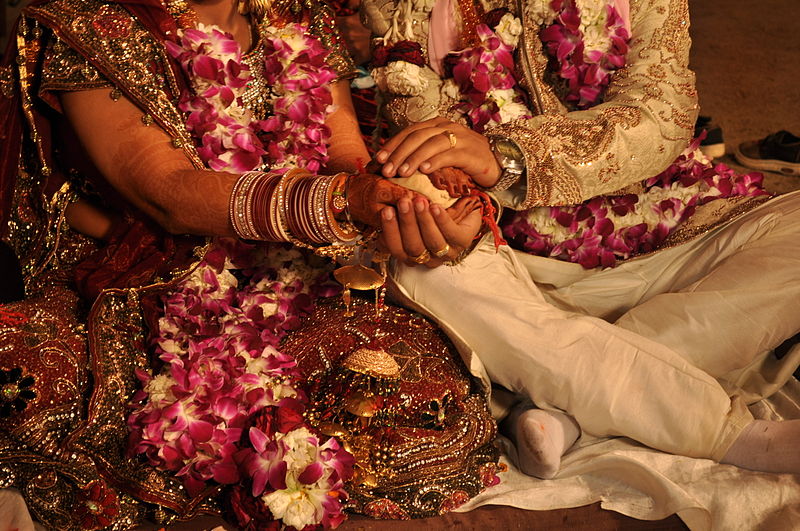
7. Marriage - Arranged Mariage System

indianWedding, Culture and Traditions in India

The concept of arranged marriage in India traces its origin to as early as the Vedic times. For royal families, a ceremony known as the 'Swayambar' would be arranged for the bride. Suitable matches from all over the kingdom were invited to either compete in some competition to win over the bride, or the bride would herself choose her ideal husband. Even today, the concept of arranged marriage remains a favourite among Indians and is an integral part of 'Indian Traditions'.

8. Religious Symbols


The Indian traditions and scriptures contain various signs and symbols which have multiple meanings. For example, the usage of the Swastika, in the Indian context, does not point towards Adolf Hitler or Nazism. It is the symbol of Lord Ganesha, the remover of obstacles. The arms of the Swastika have various meanings. They signify the four Vedas, the four constellations, or the four primary aims of human pursuit.

9. Traditions and Customs - Atithi Devo Bhavah

Hospitality towards guests is an important part of Indian Culture,  India Customs and Traditions


In India, the saying 'Atithi Devo Bhavah' is also integral. It means 'the guest is equivalent to god'. It is a Sanskrit verse taken from the Hindu scriptures, which later became a part of the 'Code of conduct for Hindu society since the guest has always been of supreme importance in the Culture of India.

10. Dresses of India - Indian Ethnic Wear

Saris - An important part of Indian Culture and attire,  India Customs and Traditions

Indian women are often seen sporting 'saris'. The sari is a single cloth and needs no stitching; it is easy to make and comfortable to wear, and also adheres to religious etiquette. It initially started as a Hindu tradition but has very elegantly spread across all religions. The same applies to the more functional 'Kurta-Pyjama', and the formal wear of 'Sherwani' for Indian men of all faiths.

11. Indian Dances


India is a land of 'unity in diversity', and our dances are no different. Different forms of dance(classified as folk or classical) find origin from different parts of the country, and they are a way of representation of the particular culture from which they originate. Eight classical dances, which are classified as Indian classical dances and find a mention in the Hindu Sanskrit text 'Natyashashtra', (a text of performing arts) are:

  • Bharatnatyam from Tamil Nadu
  • Kathakali from Kerela
  • Kathak from North, West and Central India
  • Mohiniyattam from Kerela
  • Kuchipudi from Andhra Pradesh
  • Oddisi from Odhisa
  • Manipuri from Manipur
  • Sattriya from Assam

All the dance mentioned above forms are a complete dance drama, wherein a dancer or performer narrates an entire story, almost entirely and exclusively through gestures. Such stories are mostly based on the vast Indian mythology. Classical dances in India are strictly classified as and performed according to the rules and guidelines prescribed in the Natyashastra. Just like Classical dances, folk dances in India too originate from different regions of the country. These performances are mostly based on stories which are orally passed on from one generation to the other.

Folk dances mainly trace their importance to the rural areas, where performances depict the day to day life of rural inhabitants. The process for a suitable match is one long and tiring effort, which begins with matching some criteria like the horoscope, religion, caste, professional stature, physical appearance and culture. It is made sure that majority of the requirements are a 'match made in heaven' (even if it has to be tailor-made). After all the checkboxes are ticked, the elders of the family meet for a face to face interaction. Once the talks are successful, preparations for the wedding begin in full swing.

12. Cuisine - Indian Food

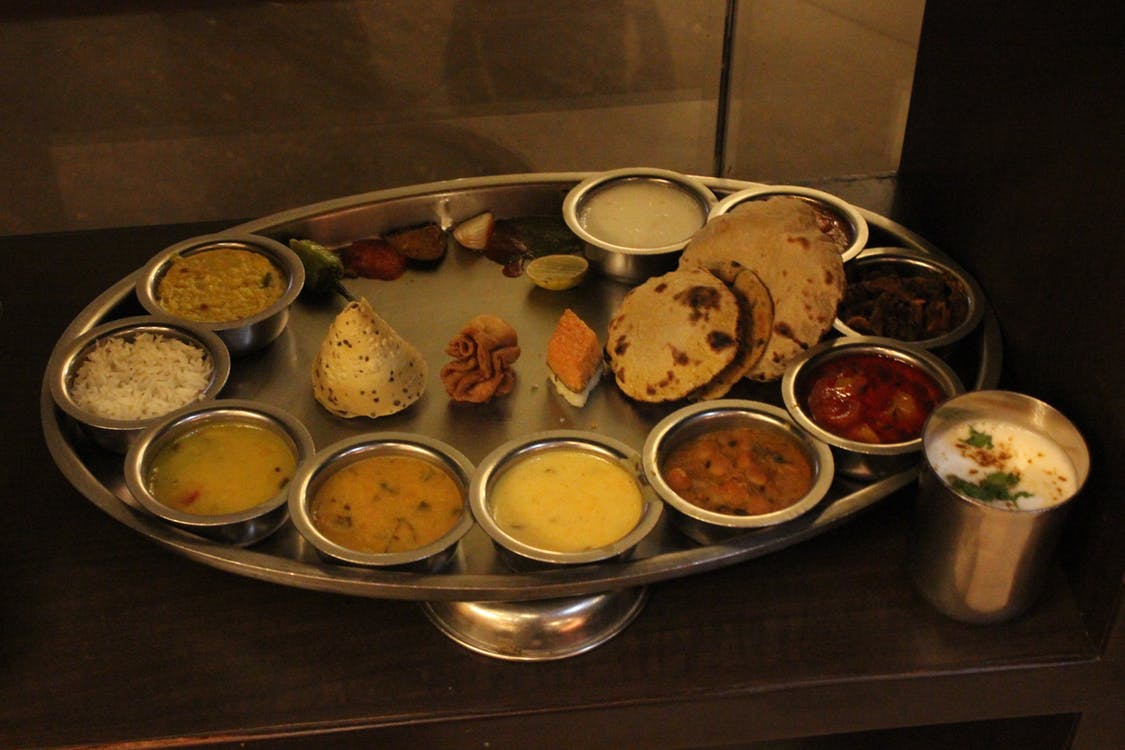
Indian Thali, India Customs and Traditions


Indian food and cuisine not only form an integral part of the culture of India but are also one of the critical factors of India's popularity worldwide. The style of cooking varies from region to region, though unanimously, Indian food has a significant reputation for its extensive use of spices and herbs. Just like dances, religious practices, language and clothes, you will also find a wide variety of food throughout the country. Almost every region is known for a signature dish or ingredient.

The staple, however, throughout the nation consists mostly of rice, wheat and Bengal gram (Chana). While vegetarian food is an integral part of Gujrati South Indian and Rajasthani cuisines, non-vegetarian dishes form a central part of Mughlai, Bengali, North Indian and Punjabi cuisine. It is also interesting to note that specific cuisines like that of Kashmir have also been influenced by foreign cooking styles from Central Asia, Persia and Afghanistan.

13. Scriptures - Epics


Indian literature can be traced back in the great epics written in the form of poems, plays, stories, and even self-help guides. The most famous Hindu epics are Ramayana and Mahabharata. Mahabharata, by Ved Vyasa, is the longest poem written in Sanskrit. Both these epics are written in order to highlight human values of sacrifice, loyalty, devotion and truth. The moral of both stories signify the triumph of good over evil.

14. Indian Martial Arts

India is home to quite a few unique styles of martial arts, some of which have ancient origins. While some martial art forms require the use of weaponry, some don't. Mainly used for combat, some martial art forms are also used for healing. In today's times, these martial art forms are popular as self-defence techniques and even fitness.

15. Eating with Hands


Eating with hands may not sound great to many people. However, it has many benefits. Fingers being heat receptors, they prevent your mouth from burning when the hot food is put inside. You get to check the temperature before eating the food. Other than that, you tend to eat slower when you dine with hands รข€” this aids in digestion. Traditionally, the right side is used to eat, and the left hand is considered to be dirty. One must thoroughly wash his/her hands with soap and water before eating. This practice makes the eating process very hygienic. Eating with hands is a widespread practice in South and East India, but it's a bit rare in North and West India. In North and West India, people use spoons to pick up the rice to eat but use fingers to break down the bread. 

16. Languages


India is socially, culturally, and linguistically very diverse. Hindi and English are widely spoken and recognised for official purposes. Other than than, there are 22 scheduled languages recognised by the constitution of India. However, more than 400 languages and dialects in India are still not known. Dialects change even with a few kilometres of travel in the state. Over the years, about 190 languages have become endangered due to very few surviving speakers.

There exist thousands of traditions and culture in India, and quite a few of them would leave outsiders rather curious. But the crux of Indian society and culture has always been to be well mannered, polite, respect others, and progress together.